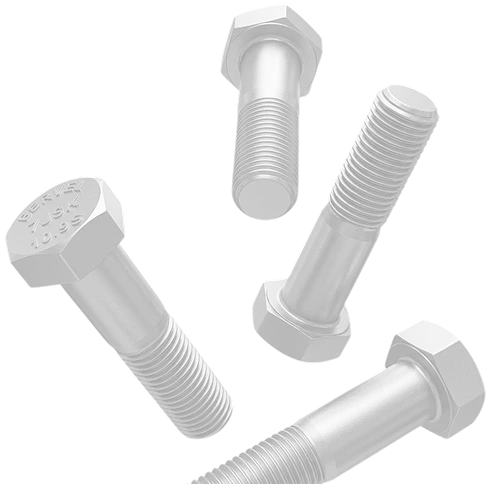
Reliability is the property of an object to maintain over time, within established limits, the values of all parameters that characterize the ability to perform the required functions under given conditions of use, maintenance, storage and transportation [1].
This concept has a deep meaning, and it is easily projected onto something large-scale and significant. Unfortunately, it is often forgotten that the reliability of the whole is made up of the reliability of its component parts. A striking example of this is metal structures. Fasteners play an important role in their RELIABILITY and durability. And not only the fastener itself, but also the culture of its use, the culture of connecting metal structures assemblies.
The realities today are such that a good layer of regulatory documentation, meticulously worked out back in the USSR, has been revised, supplemented or cancelled. Whether due to the volume of all standards, codes of rules and other regulatory documents, lack of time, underfunding or some other factor is not the point. The result is considerable confusion. At the moment, both new standards and canceled ones are used on the market. The emerging standards, partially harmonized with European standards, lag behind their European sources in terms of updating, having not even begun to be properly applied on the territory of the Russian Federation. Below are just a few examples.
For the needs of bridge construction, instead of the previously existing GOST R 52644-2006, GOST R 52645-2006, GOST R 52646-2006, GOST R 53664-2009 was introduced, but this standard applies to only three diameters: M22, M24, M27. While the GOST standards were canceled for ten: from M16 to M48. The situation is similar with lengths - the new GOST R 53664-2009 is limited to a bolt length of 150 mm. But when designing, it becomes necessary to use longer bolts, and the previous GOST regulated bolts up to 300 mm in length.
The GOST 32484.1-6-2013 system has also been put into effect, which partially overlaps the canceled GOSTs listed above. But at the same time, they lack, for example, fasteners of strength class 12.9, and high-strength fasteners are the future, since this makes it possible to reduce metal consumption and increase the load-bearing capacity of structures by reducing weight and reducing softening in nodes.
This is easy to understand with this example: an M30 bolt of strength class 8.8 can be replaced with an M24 bolt of strength class 12.9 (saving 40%) or an M27 bolt of strength class 5.8 can be replaced with M18 of strength class 12.9 (saving 60%). This is a significant saving, which will have a colossal effect on a national scale.
And there are many such examples. It is precisely because of problems with regulatory documentation that, first of all, barriers arise that cause the design and production processes to stall. The introduction of advanced technologies is seriously complicated.
The most annoying thing about this article is that currently SP 28.13330.2017 “Protection of building structures from corrosion. Updated edition of SNiP 2.03.11-85” includes a progressive zinc lamellar protective coating, but there is no reference to the testing method for fasteners with an anti-corrosion coating in a moderately aggressive environment - the most common case.
To prevent corrosion cracking of high-strength bolts, their characteristics must strictly comply with the requirements of GOST 32484.1, compliance with the heat treatment regimes of the bolts and instructions for the installation of connections. Additionally, in moderate to highly aggressive environments, high-strength bolts must be protected from corrosion by metal coatings prior to installation. Upon completion of installation, the structures, together with the protruding parts of the high-strength bolts, must be protected from corrosion by paint and varnish coatings, followed by sealing.(2)
But paint coating after installation and metal coating before installation are two different things, different approaches to testing and, hence, different methods. Just as testing methods for different objects - the results of testing the same coating on a plate and on a fastener will give incorrect results for comparison - the fastener must be tested under tension with tightening on a spacer sleeve that ensures maximum openness of the bolt shaft to the atmosphere.
As part of the external audit procedure for inclusion in the list of suppliers of fasteners for infrastructure and industrial-civil construction projects, which are actively implemented in the Russian Federation on federal projects, the BERVEL plant, together with NUST MISIS, tested fasteners with an anti-corrosion coating in a neutral salt fog chamber. The results showed a direct dependence of the RELIABILITY of the entire metal structure on RELIABILITY, which would seem to be so insignificant in terms of cost and share in the purchase volume of the fastener item.
And it’s not about the eternal debate - which is better, hot zinc, thermal diffusion or zinc lamella. The point is the culture of production and coating, as an integral part of the entire process - from design to installation.
In our work, we often encounter a discrepancy between the stated characteristics of fasteners and real values - we constantly monitor the market and conduct tests both in our laboratory center and with the involvement of specialists from the Central Research Institute PSK named after. Melnikova, MISiS. From the latter, the test results in a neutral salt fog chamber of fasteners with a zinc coating applied by thermal diffusion (Table 1.).
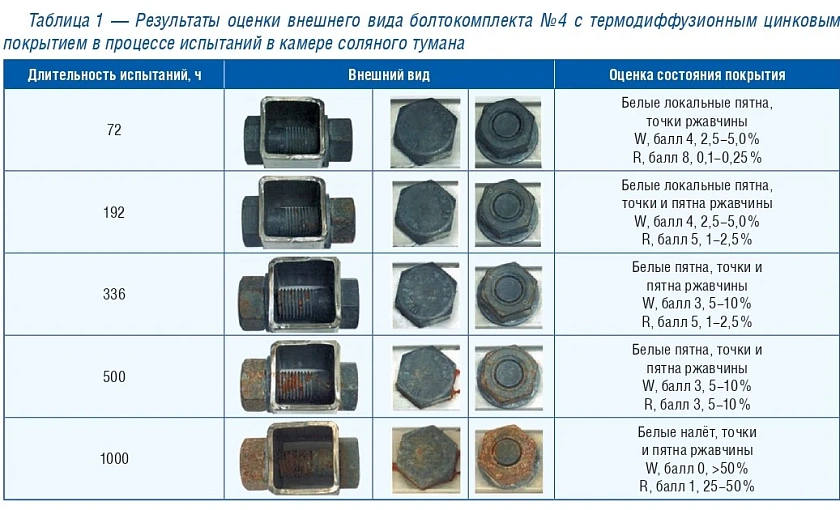
The basis is a violation of the coating technology, which immediately discredits the manufacturer - he does not control the production process. In this article we touched on several problems that have existed in the fastener market for several days now - we will analyze each of them in a series of publications. We invite those who are not indifferent to this topic and care about the industry to actively interact in covering similar cases from their practice.
After all, one thing is constant - the reliability of the product is ensured by the reliability of the supplier.
Are you confident in the RELIABILITY of your supplier?
1 GOST 27.002-2015 Reliability in technology (SSNT). Terms and definitions, GOST dated June 21, 2016 No. 27.002-2015
2 SP 28.13330.2017 "Protection of building structures from corrosion. Updated edition of SNiP 2.03.11-85" (with Amendments No. 1, 2)