The topic of development of the Arctic regions of our country is not new, but recently it has received a new impetus for development. In 2014, by Decree of the Government of the Russian Federation No. 366 of April 21, the state program “Socio-economic development of the Arctic zone of the Russian Federation for the period until 2020” with three subprograms was approved; in August 2017, changes were made to it - the program received an extension of its implementation until 2025. and a budget of more than 190 billion rubles.
One of its principles is the frame-cluster approach. This approach implies, on the one hand, the development of the existing energy and transport foundation (framework), and, on the other hand, the addition of the following components to this frame. The result of these processes should be a strong and comprehensively developed Arctic zone of the Russian Federation. In particular, to implement this task it is necessary to modernize or create anew the transport infrastructure, which will allow solving all other problems: from the delivery of material resources for the implementation of any project to the transportation of the finished product. First of all, we are talking about water and rail transport: a tanker needs a port, with all the accompanying infrastructure; for railway personnel - tracks and service units; personnel, without whom it is impossible for any facility to function - conditions for work and rest. At the same time, the specific climate of the developed territories poses large-scale tasks for the country's enterprises in the design and development of innovative products that can meet the highest requirements.
The BERVEL high-strength fastener plant (LLC ZVK "BERVEL") is an enterprise equipped with the most modern production and laboratory equipment, which allows it to actively master advanced technologies for the production of fasteners and successfully bring to market products that have not yet been produced in our country. For example, for the first time, the production of fasteners with zinc lamellar coating was mastered. The use of such fasteners is very widespread abroad, but in Russia, until recently, its use was limited, since domestic enterprises did not produce it, and imported fasteners with such a coating are very expensive. Today, fasteners with zinc-lamella coating are successfully used in domestic bridge construction, industrial and civil construction and, of course, in mechanical engineering.
Also, for the first time, the BERVEL high-strength fasteners plant launched mass production of fasteners made of weather-resistant steel. This allows us to give a new impetus to the use of weather-resistant steels in the construction of infrastructure facilities.
The use of weather-resistant steels in construction has become widespread since the 60s of the 20th century in foreign bridge construction. The main advantage of using metal structures made from such steels over traditional ones is that there is no need for additional corrosion protection, primarily galvanizing or painting. These steels, as their name suggests, are inherently corrosion resistant due to their properties. Currently, thousands of spans made of weather-resistant steel without painting are in operation in America and Europe, Japan, Australia and New Zealand.
The most controversial aspect of such metal structures is their aesthetic characteristics. Perhaps in densely populated areas in warm and temperate climates, there is room for debate about aesthetics. But even here everything is not clear. Weather-resistant steels have become widespread throughout the world, not only in infrastructure construction, but also in a wide range of industrial and civil projects; they are preferred by many modern architects and designers precisely for their aesthetic properties. In remote and hard-to-reach areas, performance properties still come to the fore, in particular, the absence of the need for painting during installation, and, more importantly, during further operation. The use of weather-resistant steels ultimately results in savings both at the construction stage and (to an even greater extent) at the operation stage of the facility.
There is experience in using metal structures made of similar steel in our country. So, back in 1989, by order of the Department of Railways and Communications of the Ministry of Railways, 3 melts of grade 14KhGNDTS steel were smelted at the Azovstal plant and rolled into a thick sheet with a thickness of 12 to 20 mm. From this sheet, three experimental lattice-type spans with a bottom ride were made according to a standard design (1293K). The length of the spans was 55 m.
During 1989-1990, the spans were assembled and installed in existing sections of the track on three Russian railways: South-Eastern (across the Vorona River, 579 km of the Kirsanov-Rtishchevo section), East Siberian (across the Snezhnaya River, 5383 km of the Murino-Vydrino section) and South Ural (across the river Kamyshly-Ayat, 175 km of the Kartaly-Aidyrlya stretch). An examination of the technical condition of the experimental spans after 20 years of operation without painting showed that all three are in satisfactory condition and are operated as usual. The thing is that the protective mechanism of this type of material worked as planned - a thin layer of corrosion products no more than 0.3 mm thick formed on the surface of the unpainted elements. This layer protects the structure from further corrosion. The span elements are dark brown.
Recently, a number of other facilities made of weather-resistant steel have been built and are currently being built, using Russian-made steel.
For many years, one of the problems hindering the development of bridge construction from weather-resistant steel was the lack of appropriate fasteners for these structures. To maintain the corrosion resistance of such structures, it is necessary to use fasteners also made of weather-resistant steel. Until recently, none of the domestic enterprises produced such fasteners. On the experimental bridges, fastening elements standard for this type of metal structures were used; the use of steel, which allows maintaining the properties of the structures themselves, was not envisaged by Russian standards (GOST 22356-77 and GOST 52643-2006). The bolt heads, nuts and washers were simply painted dark brown during installation.
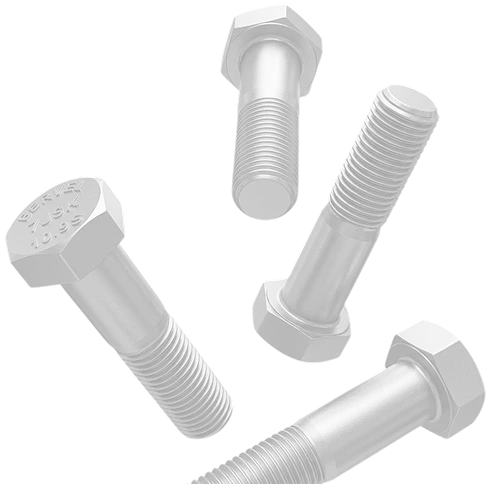
>Currently, the problem of producing fasteners from weather-resistant steel has been solved at the BERVEL high-strength fasteners plant. The fasteners fully comply with the high requirements of the internal corporate standard, developed on the basis of GOST 53664-2009, which allows them to be successfully used at present in the construction of infrastructure facilities. High-strength fasteners made of weather-resistant steel produced by LLC ZVK "BERVEL" are the missing link for the wider dissemination of such an innovative solution as the use of special weather-resistant steels in the construction of infrastructure facilities, including in the development of the Arctic zone of the Russian Federation.