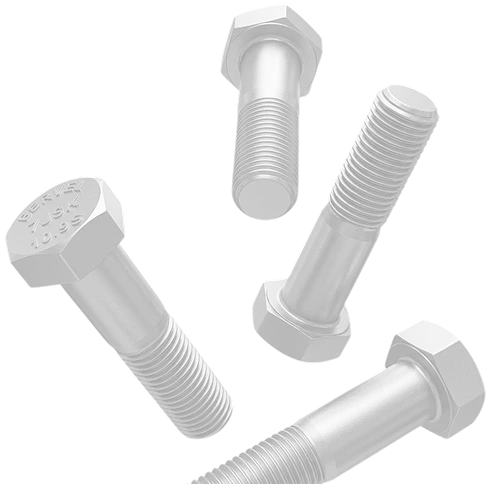
Risks of reducing the performance properties of fasteners used in metal structures of infrastructure facilities.
Alyabyev A.V., project manager
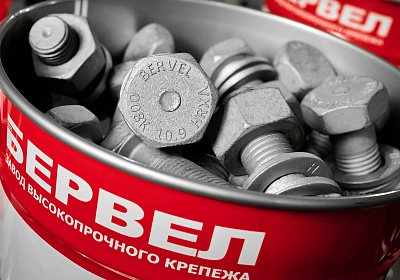
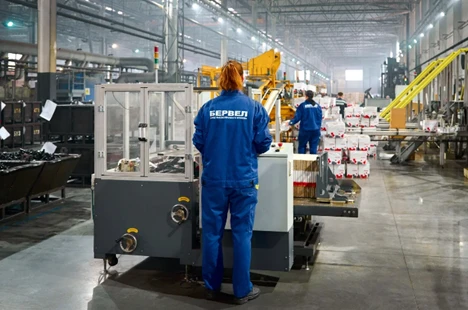
Since its founding, LLC ZVK "BERVEL" has been engaged in the mass production of fasteners, which are used in the assembly of metal structures of infrastructure buildings. These traditionally include: bridge structures, power transmission line supports, masts and lighting poles, industrial and transport construction sites. During operation, these types of structures are subject to high static and dynamic loads, often in extremely harsh climatic conditions, and they are united by a single requirement: their service life is decades. Throughout this period, the design must serve its functional purpose and ensure safe operation and maintenance. To do this, all components of the structure must strictly comply with the working documentation. Taking into account the experience of delivering ZVK "BERVEL" to objects relevant to the topic of the article, I would like to identify possible risks of reducing the performance properties of fasteners, which are often not identified during the incoming inspection of products when they are delivered to infrastructure construction sites.
Factors that determine fastener requirements
Design documentation for the types of structures listed above and sets of rules traditionally require the use of fasteners of strength classes 8.8/8 and 10.9/10. Also, in a number of cases, fasteners of class 12.9/12 are used in industrial construction structures. These facts make it mandatory to use alloy steels and heat treatment (hardening plus tempering) in the manufacture of fasteners. The resulting mechanical properties make it possible to adequately withstand the loads that arise during the operation of infrastructure facilities.
The second factor determining the reliability of the use of fasteners in the structures under consideration is its ability to withstand corrosion loads throughout the service life of the structure. The current regulatory and technical documentation [1] (SP 28.13330.2017 “Protection of building structures from corrosion”, table Ts.11) provides reference data on the rate of corrosion penetration into protective zinc coatings applied to fasteners under various operating conditions.
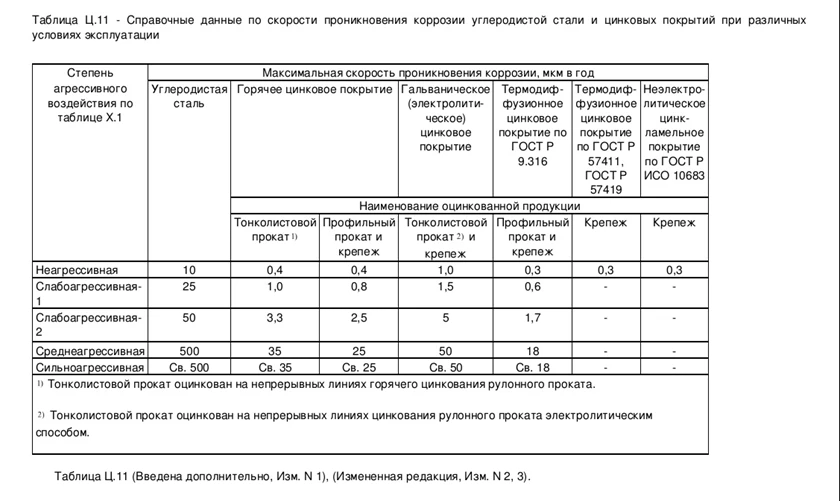
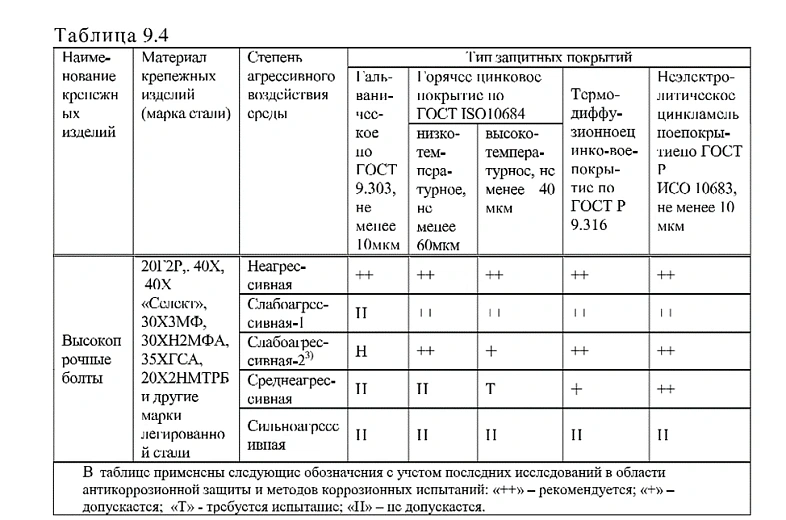
Unfortunately, at the time of the release of this standard in 2017, its developers did not have reliable information about the resistance of zinc lamellar coating [2] under varying degrees of aggressiveness of the corrosive environment. Therefore, based on this document, we can only conclude that this coating is highly durable in a non-aggressive atmosphere. Our long-term experience in the production and supply of fasteners with zinc-lamella coating, primarily for installations of bridge metal structures, including in the coastal climate, indicates the high ability of this coating to withstand the effects of aggressive atmospheres and guarantee long service life of infrastructure structures. To confirm our experience, we can cite data from the standard of JSC TsNIIPSK im. Melnikov" STO 02494680-0074-2022 "Steel building structures. CONNECTIONS WITH HIGH STRENGTH BOLTS Technical requirements. Methods of control". This standard [3] contains Table 9.4, which recommends the use of zinc lamellar coating up to moderately aggressive environments in terms of SP28.
The lack of reliable data in SP28 on the resistance of zinc-lamella coating led to the absence of mention of this highly effective method of protecting fasteners in a number of standards of organizations performing the functions of the end customer at installation sites of infrastructure structures.
Let's take an overhead power line support as an example of an infrastructure structure. Rosseti PJSC uses the organization standard STO 34.01-2.2-008-2016 “METAL GRID OVERHEAD POWER LINE SUPPORTS General Technical Requirements”, section 5 of which is designated “Reliability Requirements”. Clause 5.1 of this standard determines the service life of the support to be at least 50 years. Clause 3.7 of Section 3 “Requirements for Materials” defines acceptable methods of anti-corrosion protection of fasteners: hot-dip galvanizing and thermal diffusion galvanizing [4].
Let's compare the data in Table Ts.11 SP28 with these requirements. The operating conditions of overhead line supports usually correspond to the “slightly aggressive-1” environment. According to SP28, hot zinc under such conditions loses a maximum of 0.8 microns per year. To eliminate the appearance of traces of red corrosion during the service life of the structure, the coating should be no thinner than 50 x 0.8 = 40 microns. Which fully complies with the requirements of the current GOST R ISO 10684-2015 for hot-dip galvanizing of fasteners, which prescribes providing a coating with a local thickness of 40-80 microns with an average coating thickness of at least 50 microns [5]. According to the same table, the thermal diffusion coating will lose 0.6 microns per year. Therefore, the coating should be no thinner than 50 x 0.6 = 30 microns. That is, TD4 (thermal diffusion coating class 4) 21-30 microns according to GOST 9.316-2006 is no longer a passable option [6]. This standard offers a coating of a higher class - TD5 40-50 microns.
When operating in a more aggressive atmosphere, it is necessary to apply additional paint and varnish coatings to galvanized fasteners.
Thus, we come to the conclusion that fasteners used at infrastructure facilities during the manufacturing process must undergo such technological steps as hardening, tempering and the application of a protective zinc coating with a thickness of at least 40 microns. Such coatings are approved by STO 34.01-2.2-008-2016 for use on overhead line supports [4].
What fasteners are installed on the objects?
Now let's pay attention to the way the fasteners get to the installation sites of infrastructure structures. Currently, there are 5 enterprises in the Russian Federation that produce fasteners under mass production conditions and are at the same time capable of hardening and subsequent tempering of fasteners in a protective atmosphere that guarantees the absence of decarburization of the surface layer of the thread. These factories are well known, and ZVK "BERVEL" is one of them. The ability to apply protective coatings suitable for protecting fasteners in infrastructure structures is built into the technological process only on ZVK "BERVEL". We have automatic lines for hot-dip galvanizing and zinc-lamella coating. Other colleagues offer fasteners to the market without coating or with protective coatings that, due to their properties, are not used on the objects in question. However, every infrastructure facility in the country is equipped with fasteners with the required protective coatings. Who comes to the aid of the economy? The answer lies in the organization of a system for completing structures supplied for installation.
The contractor constructing the project, be it an oil refinery, a transmission line, or a highway lighting project, holds a competition to produce the structures he requires. The goal of the competition is obvious - to obtain the required product at the lowest possible price with minimal organizational costs. The competition is won by the most worthy metal structures plant. Making KMD drawings and how to assemble it all later is now his task. And he, naturally, wants to solve it with minimal costs. The advance payment is spent on the purchase of rolled metal; fasteners are often remembered when it’s time to assemble the cars for shipment. And when the question “How will this dear customer assemble it?” stands up to his full height, a frantic search begins for several dozen product items in quantities ranging from a few pieces to tens of tons of each.
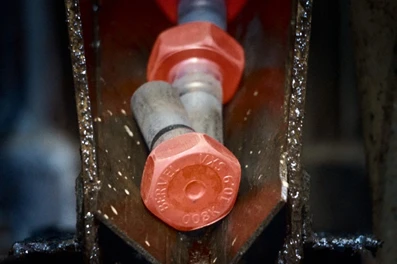
Factories engaged in mass production of hardware are extremely inconvenient partners in such a situation. They only have to wait one and a half to two months for the metal after placing the order at the metallurgical plant. And mass production traditionally refuses to take less than a ton for a position. Deadlines are running out, and the risks of receiving fines and disqualification at sites are increasing. What to do? The answer is well known: dozens of trading companies purchase uncoated fasteners of the required standard and strength class from fastening factories, which patiently wait for their project to find out what kind of coating will be applied to it. It would seem that this is the way out of the situation. The problems, as always, are in the details.
Standards for fasteners used for infrastructure facilities require the production of bolts with a thread with a tolerance range of 6g (for example, table 3 of GOST R ISO 4014-2013) [7], and nuts with a thread with a tolerance range of 6H (for example, table 3 of GOST ISO 4032-2014) [8].
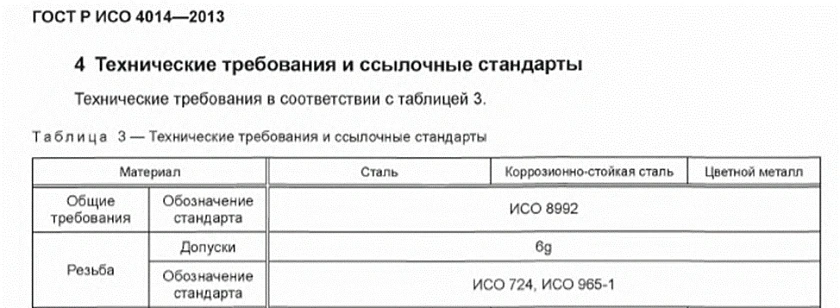
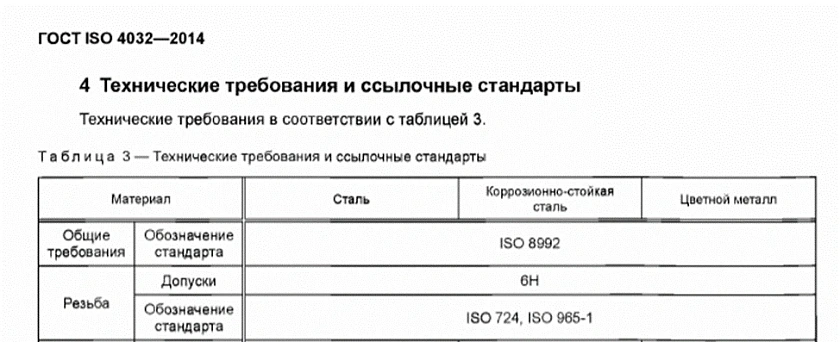
It is with this thread profile that factories test the mechanical properties of bolts and nuts in accordance with GOST R ISO 898-1-2011 [9] and GOST R ISO 898-2-2013 [10] and confirm their strength class, which must correspond to the design documentation for the facility. But with such tolerance fields, it is impossible to apply either thermal diffusion class 5 according to GOST 9.316-2006 with a thickness of 40-50 microns [6], or even hot zinc according to GOST ISO 10684-2015 with a thickness of 40-80 microns [5]. Table 7 of GOST 16093-2004 [11] and numerous cases of fasteners not twisting at objects, which occur several times every year, openly tell us this. Obviously, it is necessary to lower the thread profile. Moreover, GOST ISO 10684-2015 directly requires this [5]. But then one of the factories will have to produce fasteners on the market that do not comply with GOST in terms of thread tolerance for uncoated fasteners. An undersized bolt thread will obviously lead to a decrease in the mechanical properties of the fastener, primarily the tensile strength. It is difficult to say what quality certificate such a product will be equipped with and how the plant will be able to ship it.
However, trading organizations turn a blind eye to such formalities. Next, the fastener undergoes a coating procedure, which should provide it with a service life commensurate with the service life of the infrastructure facility. As noted above, during the manufacturing process at the factory, the fasteners underwent a heat treatment procedure: hardening, the heating temperature of which is determined by the steel grade, and tempering, the temperature of which is determined by the technologist, guided, among other things, by the requirements of the current standard for the mechanical properties of fasteners GOST R ISO 898, which states that the tempering temperature to achieve strength classes 8.8 and 10.9 must be at least 425 °C [9, 10]. An increase in tempering temperature leads to a decrease in strength. In practice, tempering of fasteners of the indicated strength classes is carried out approximately in this temperature range.
To avoid being dependent on outside contractors, many fastener retailers have purchased their own coating equipment. Hot zinc is a molten bath, licenses for hazardous production, an industrial volume of connected energy capacity and a general production culture required to work with complex automated equipment of very high cost. Therefore, most trading organizations choose equipment for thermal diffusion galvanizing, where the financial threshold for entering the market is several times, if not orders of magnitude, lower. The resource https://www.zinkportal.ru [12] reports: “To obtain a thick zinc coating with good technological properties, inert materials are introduced into the powder mixture for thermal diffusion galvanizing. This allows chemical-thermal treatment to be carried out at a temperature above the melting point of zinc (tmelting point Zn = 419.4 °C), preventing sintering of the zinc mixture and the formation of sagging on the finished product.” In the same place: “It was experimentally established that during diffusion galvanizing of steel at a temperature range from 300 to 360 degrees, the process of formation of a zinc coating is practically not observed... The dependence of the growth of the thickness of the zinc coating on the heat treatment temperature (in the temperature range from 360 to 540 degrees) is linear.”
In clause 9.6.2 of the previously mentioned STO 02494680-0074-2022 of ZAO TsNIIPSK im. Melnikov” we read that “thermal diffusion coatings are applied by chemical-thermal treatment of products at a temperature of 420-480 °C in zinc-based powder mixtures...” [3]. Thus, there is every reason to assume that the process of applying thermal diffusion zinc coating is carried out at temperatures not lower than the temperatures of the previous tempering at the manufacturer. In fact, a repeated, long (several hours) tempering is carried out, which directly affects the strength characteristics of the fastener. And the desire to increase the productivity of the process to increase profitability can lead to the fact that the temperature of the re-tempering can exceed the temperature of the primary by tens of degrees.
The above facts, such as the need to lower the thread profile to apply a coating of the required thickness (in the case of trading organizations, this is periodically achieved by additional threading on the nuts) and the high probability of softening during repeated tempering, clearly indicate the need to test the products thus obtained for a set of mechanical properties and, first of all, tensile tests on the oblique washer of coated bolts in accordance with the requirements of SP 16.13330.2011 “Steel structures”, table D.3, giving an unambiguous answer about the strength of the product under operating conditions under working load [13]
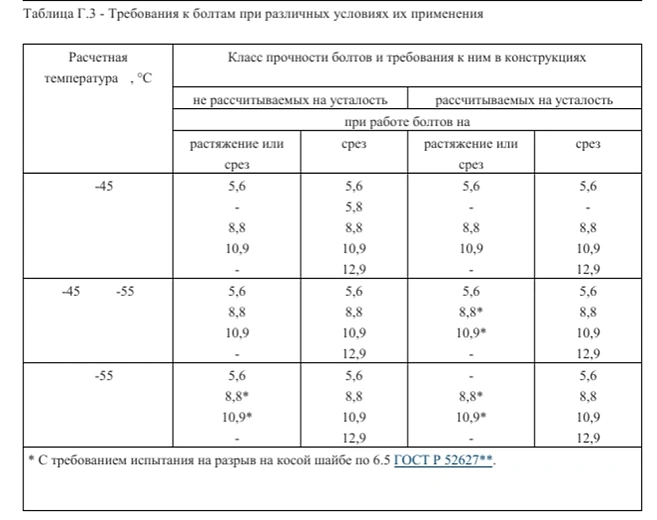
Over the previous 5 years, I have not seen a single certificate issued by a trading organization confirming the mechanical properties of fasteners after applying thermal diffusion zinc coating. And I won’t see it, because there are no regulatory documents explicitly requiring this to be done.
A number of metal structures factories and several large trading organizations that constantly participate in tenders for the supply of fasteners for infrastructure facilities operate baths for applying zinc to fasteners in a melt. It is important to identify the risks when applying this coating.
GOST ISO 10684-2015 defines two temperature ranges for coating application: the range from 455 °C to 480 °C is defined as galvanizing at standard temperatures, from 530 °C to 560 °C – as high-temperature galvanizing [5]. The practice of ZVK "BERVEL" shows that galvanizing at a standard temperature produces layers whose thickness exceeds the 40-80 microns required by the standard. Only the use of high-temperature galvanizing guarantees obtaining a coating with the required layer thickness characteristics on high-strength fasteners of strength class 8.8 and 10.9, ensuring subsequent screwing of the fasteners by hand. As with TD5 (40-50 microns), but even more important (coating thickness 40-80 microns) is the weakening of the thread profile, which worsens the mechanical properties of the final product. The temperature of galvanizing in the melt exceeds the temperature of the initial tempering at the manufacturing plant by more than 100 ° C, the thermal conductivity of the melt is several times higher than the thermal conductivity of the atmosphere of the tempering furnace. These factors ensure that softening secondary tempering will occur and the mechanical properties of the fasteners in the coating must be confirmed by new tests.
A fact that will be obvious to anyone who reads the text above: not a single fastener trading organization in the country provides a certificate for the mechanical properties of fasteners after hot-dip coating. A manufacturer's quality certificate for uncoated fasteners is always provided, indicating its mechanical properties, and a document called a quality certificate for coating. The quality passport always indicates the thickness of the coating, there is a reference to the standard for the coating, and there are no tests for the mechanical properties of the fasteners after applying the protective coating. The only supplier on the market that provides a quality certificate for hot-dip galvanized fasteners indicating its mechanical properties is ZVK "BERVEL".
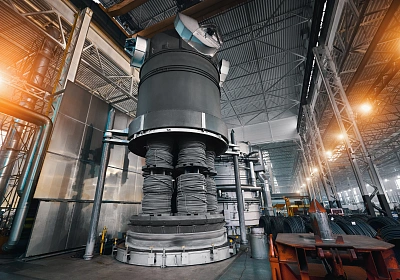
Why do ZVK "BERVEL" fasteners have the required mechanical properties after hot melt coating? Before becoming a fastener, a hot-rolled circle goes through the following production stages: annealing, calibration, stamping, heat treatment, thread forming, hot-dip galvanizing. Each of these processes affects the basic mechanical properties of the metal from which the product is made: hardness, tensile strength, impact strength. ZVK "BERVEL" controls each of these processes and adjusts the processing modes in such a way as to guarantee the final result - coated fasteners, whose characteristics fully comply with the requirements of standards for mechanical properties. Trading organizations that do not produce fasteners are deprived of this opportunity and mask the properties of their products in ways available to them. In most cases, factories producing metal structures are satisfied with this situation, with the rare exception of very large enterprises with history and an impeccable reputation.
A few words about the quality of thermal diffusion zinc coating on the Russian market. The thermal diffusion galvanizing technology itself is more than 100 years old. Naturally, over such a long period, current technology could not help but develop. And we periodically come across very worthy samples that show good results when tested in a neutral salt fog chamber. Unfortunately, most of these samples were manufactured outside the Russian Federation. And in the Russian Federation, GOST R 9.316-2006 “THERMODIFFUSION ZINC COATINGS General requirements and control methods” is in force, table 3 of which shows [6] that the resistance when tested in salt fog of thermal diffusion and galvanic coatings at equal thicknesses is approximately the same (TD2 10-15 μm - 144 h), for comparison: GOST ISO 4042-2015 “Fastening products. ELECTROLYTIC COATINGS”, Appendix B: zinc coating with the most resistant type of chromating D, 12 microns thick - 168 hours before the first traces of red corrosion appear [14]. At the same time, everyone understands that “galvanizing” on fasteners on objects with a long service life is not an appropriate coating. One of the factories producing fasteners in its certificates guarantees protection against corrosion of fasteners in galvanization for six months, and thermal diffusion is approved for use on all objects with a service life of decades. This situation with the regulatory framework completely discourages industry from improving technological processes and allows a flood of low-quality products to enter the market. What happens is that fasteners with a protective anti-corrosion thermal diffusion coating have to be protected with a preservative lubricant during delivery, and that upon arrival at the site, such fasteners are often covered with rust.
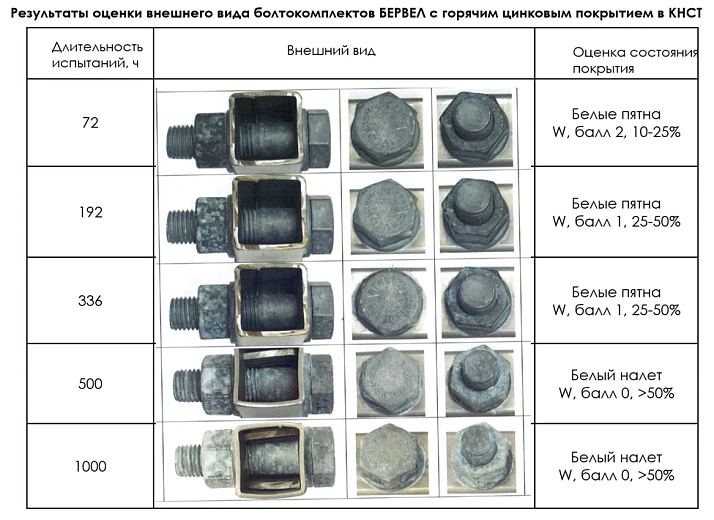
Repeatedly conducted studies in independent laboratories of ZVK "BERVEL" products with hot zinc coating demonstrate stable resistance of more than 1000 hours before the first traces of red corrosion appear.
What's the result?
The end customers of metal structures for infrastructure facilities build oil and gas processing complexes, main power lines, roads, railways and power plants. They are undoubtedly recognized professionals in their specialized areas, otherwise the country would not trust them to build something that our children, grandchildren and great-grandchildren will use. But from the position of the end customer, it is impossible to control every highly specialized area when implementing such large projects. The logic of implementing such projects presupposes the unconditional competence and integrity of each contractor. In a situation where global warming regularly creates conditions for the occurrence of above-design climatic loads (snow, wind, temperature, ice) [15] on structures, the supply of components whose operational strength properties do not meet the requirements of the working documentation is a time bomb for the infrastructure being created that is critical for the country.
LLC ZVK "BERVEL" invites all interested parties to pay close attention to the identified problem and calls on technical supervision units operating at installation sites of infrastructure structures to constantly monitor the supplied high-strength fasteners to ensure that the accompanying documents indicate the quality of the mechanical properties of products tested after applying a protective anti-corrosion coating.
Literature
1. SP 28.13330.2017. Protection of building structures from corrosion.
2. GOST R ISO 10683-2020. Fastening products Systems of non-electrolytic zinc-lamella coatings.
3. STO 02494680-0074-2022. Steel construction structures. Connections with high-strength bolts. Technical requirements. Control methods. - Organization standard of JSC TsNIIPSK im. Melnikov."
4. STO 34.01-2.2-008-2016. Metal lattice supports for overhead power lines. General technical requirements. - Standard of the organization of PJSC Rosseti.
5. GOST ISO 10684-2015. Fastening products. Coatings applied by hot-dip galvanizing.
6. GOST 9.316-2006. Thermal diffusion zinc coatings. General requirements and control methods.
7. GOST R ISO 4014-2013. Hex bolts. Accuracy classes A and B.
8. GOST ISO 4032-2014. Normal hex nuts (Type 1). Accuracy classes A and B.
9. GOST R ISO 898-1-2011. Mechanical properties of fasteners made of carbon and alloy steels. Bolts, screws and studs of established strength classes with large and fine thread pitch.
10. GOST R ISO 898-2-2013. Mechanical properties of fasteners made of carbon and alloy steels. Nuts of established strength classes with large and fine thread pitch.
11. GOST 16093-2004 (ISO 965-1:1998, ISO 965-3:1998). Basic norms of interchangeability. Metric thread. Tolerances. Landings with clearance.
12. Powder mixtures for thermal diffusion galvanizing [Electronic resource]. – 2018. – Access mode: https://www.zinkportal.ru/poroshkovye-smesi-dlja-termodiffuzionnogo-cinkovanija/
13. SP 16.13330.2011. Steel structures.
14. GOST ISO 4042-2015. Fastening products. Electrolytic coatings.
15. Senkin, N. A. Progressive collapse and interaction of supports in a linear chain of overhead lines / N. A. Senkin // Materials of the VIII International Scientific and Practical Conference “Supports and Foundations of Overhead Lines. Technologies of design and construction". Saint Petersburg. - 2023.