Translation: Ignatova D.V., marketing specialist LLC ZVK "BERVEL"
One of the main reasons for bolted joint failure is weakening of tension. The emergence of new technologies and requirements creates new design problems. It is necessary to take into account factors such as increasing the thickness of surface coatings to combat corrosion, new technologies using layered composite materials, etc. Connections must withstand the following types of load: vibration, dynamic loads, settlement, relaxation.
Today, polymers and laminated composite materials are becoming increasingly popular in industry, which only exacerbates the problem of loose bolted joints. Recent advances in polymer and laminated composite materials - with their high corrosion resistance and impressive strength-to-weight ratio - make it possible to reduce the weight of structures without compromising their strength. Therefore, today manufacturers are increasingly resorting to the use of parts made from these materials in various industries, from mechanical engineering to aviation. These materials are softer than previously used metals, adding the risk of weakening to vibration and dynamic loads.
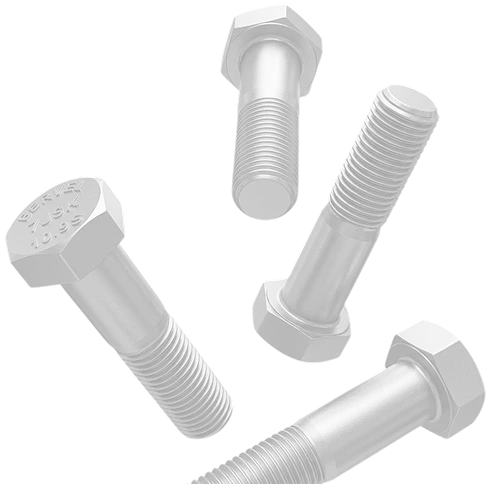
There are two main types of connections between structural elements and with other materials: adhesive (glue) and bolted connections. However, the use of adhesives makes it difficult and sometimes eliminates the possibility of disassembling structural elements. In industry, bolted connections are mainly used. The advantages of bolted connections are their manufacturability and low cost, low sensitivity to temperature and atmospheric influences, the possibility of non-destructive disassembly, etc. However, the greater the number of parts being fastened, the more loosening the bolted joint is subject to. Settlement and weakening increase with each additional contact surface.
A loose connection can be caused by the following factors:
1. Draft;
2. Relaxation;
3. Creep of metals.
Draft
When tightening bolted joints, the pressure exerted on the materials being fastened leads to immediate leveling of surface irregularities and significant settlement in the first few hours after tightening. Once aligned, the parts become less resilient, resulting in loss of preload. When the preload is significantly reduced, the bolted connection weakens, which increases the risk of fatigue failure of parts.
Relaxation
Some materials, such as soft metals, composites and polymers, compact over time, causing a loss of preload.
Creep
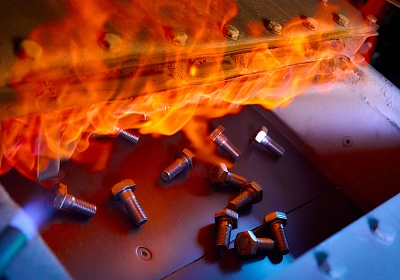
In modern conditions, the operation of structures is often associated with high temperatures. Structural elements of supersonic aircraft heat up to 200 g and higher in flight, parts of cargo turbines of aircraft engines operate at temperatures of 600-1000 g. The effect of high temperatures has to be taken into account in power and chemical engineering, etc. At elevated temperatures, structural materials exhibit two new properties - creep and long-term strength. Creep is an increase in plastic deformation under constant loads; Long-term strength is the dependence of breaking stresses on long-term operation. Materials are most susceptible to creep at elevated temperatures. Creep of the material leads to an increase in deformations, which may be undesirable or unacceptable for design reasons. However, the creep of a material has the greatest influence on the redistribution of stresses in structural elements, since creep deformations are comparable and often exceed elastic deformations. This phenomenon leads, for example, to a relaxation (drop) of tightening stresses in bolts, to the relaxation of favorable residual stresses after the use of strengthening technology, etc.
In conclusion, it is worth emphasizing that the safety of bolted connections is of paramount importance. Connecting parts is one of the most important stages in creating a product or system. Therefore, to ensure maximum safety and reliability of complex structures, continuous optimization of bolted fastening systems is necessary.
Date: 05/11/2018
Source:Fastener and Fixing magazine