Ageev V.S., General Director
LLC "Research and Production Center of Bridges"
DEVELOPMENT OF STANDARDS
FOR SETS
HIGH STRENGTH FASTENERS
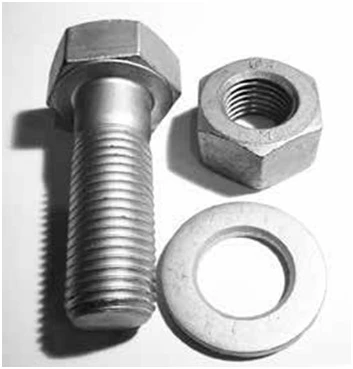
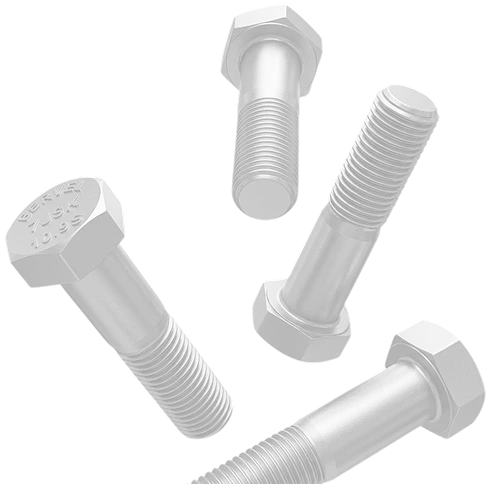
The purpose of standardization is the unconditional interchangeability of products manufactured according to the same standard by different manufacturers. However, when applied to high-strength fasteners, this rule often did not work. High-strength bolts, nuts and washers made by different manufacturers met the standard in their mechanical characteristics, but in different combinations showed a wide variation in an important technological characteristic - the torque coefficient * (k-factor). This forced various departmental instructions to prohibit the assembly of high-strength bolts with nuts (and sometimes even washers) from different manufacturers.
In our country, the first step towards a complete supply of high-strength bolts, nuts and washers was the organization standard STO 23735833-001-2008, developed by Research and Production Center of Bridges LLC (NPC Bridges) for NPO Mostovik, “Kits of high-strength bolts, nuts and washers for them for steel bridge structures. Technical requirements". This document formulated the rules for the formation and acceptance of bolt kit batches. The organization's standard was based on the provisions of GOST R 52643-2006 - GOST R 52646-2006** and tightened the requirements of national standards in terms of ensuring the stability of the twist coefficient within each batch of bolt sets based on the limitation of the standard deviation of the acceptance test results.
During the same period, a series of standards EN 14399-1 - EP14399-6 for high-strength tension-controlled bolt assemblies were introduced in the European Community. The very name of the series of standards indicates a change in the object of standardization, a transition from the standardization of an individual product to the formulation of general requirements for a group of products used in the set.
The construction of large transport infrastructure facilities in the Far East, Sochi and St. Petersburg provided extensive material for analyzing the quality of workmanship, the realities of packaging and the practice of using high-strength fasteners. For a number of reasons, federal customers had to use special orders to limit the supply of high-strength fasteners from different manufacturers at a construction site. But these instructions could not influence the cooperation of fastener manufacturers, hidden from the eyes of customers. Therefore, only a portion of the facilities received fasteners supplied by one manufacturer. All this, in the context of outdated regulatory documents in the industry on the construction of friction connections on high-strength bolts and in the absence of mass-produced equipment for controlling the twist coefficient, created many problems at the facilities.
* IN GOST R ISO 16047–2009 this coefficient is called the torque coefficient K (K-factor) - editor's note.
** GOST R 52643-2006 High-strength bolts and nuts and washers for metal structures. General technical conditions.
GOST R 52644-2006 (ISO 7411:1984) High-strength hex head bolts with an increased wrench size for metal structures. Technical conditions.
GOST R 52645-2006 (ISO 4775:1984) High-strength hex nuts with an increased wrench size for metal structures. Technical conditions.
GOST R 52646-2006 (ISO 7415:1984) Washers for high-strength bolts for metal structures. Technical conditions.
The positive experience of using high-strength fasteners from Russian manufacturers, who do not allow their own fasteners to be mixed with products purchased from other enterprises to complete bolt sets, indicated the need to change the regulatory framework in this area and the possibility of improving the situation in the consuming industry due to this. The European standards EN 14399 series are a good example for solving this problem.
It should be noted that in neighboring countries, in the Republic of Belarus and Ukraine, translations of the series of standards EN 14399-1 - EP14399-6 are already used in national standardization. However, an analysis of European standards showed that their direct use in the Russian economy is inappropriate due to the complete absence of product acceptance control rules in them, as well as the need to introduce a number of provisions of GOST R 52643-2006 - GOST R 52646-2006.
The need to change the regulatory documentation for high-strength fasteners was considered by the Technical Committee of Rosstandart No. 229 “Fasteners”, and such work was included in the standardization plan for 2012. NPC Bridges prepared a translation of European standards and, on their basis, developed the first edition of six interstate standards, which are now being submitted for open discussion. A series of standards has been prepared for discussion by specialists from the Research and Production Center of Bridges, who are the authors of GOST R 52643 – GOST R 52646.
The structure of the series of interstate standards repeats the structure of the series of European standards:
- GOST “High-strength bolt sets for structural pre-tensioning. General requirements"
- GOST “High-strength bolt sets for structural pre-tensioning. Pre-tension test"
- GOST “High-strength bolt sets for structural pre-tensioning. HR System - Hex Bolt and Nut Kits"
- GOST “High-strength bolt sets for structural pre-tensioning. HV system - sets of hex bolts and nuts" 5. GOST "High-strength bolt sets for structural pre-tensioning. Flat washers" 6. GOST "High-strength bolt sets for structural pre-tensioning. Flat washers with chamfer"
The structure of all developed standards follows the structure of the source documents. However, all standards are more or less modified in relation to foreign analogues to take into account the peculiarities of national regulatory documentation and economics. The changes made to the original text of the European standards are discussed in detail and argued in the Explanatory Notes to each standard in the series, which are posted on the above sites along with the text of the standards. Therefore, in this article it is advisable to consider only the most fundamental issues that arose during the development of the first edition of interstate standards, to which special attention should be paid during discussion.
GOST “High-strength bolt sets for structural pre-tensioning. General Requirements" contains technical requirements for permissible deviations in fastener dimensions; lists of mechanical and technological properties, types of tests and criteria for assessing these properties; quality control rules at different stages of production. The standard was developed based on the text of EN 14399-1, supplemented by the provisions of GOST R 52643-2006 (as amended No. 1).
The most important addition was the introduction of the “Acceptance control” section into the standard, which was absent in the text of EN 14399-1, just as the concept of “inspected batch” was absent in the text. In terms of ensuring and controlling product quality, European standards adopted after 2005 are based on a system of factory production control. But production traditions in the economies of the countries of the Eurasian Union, for which this standard was developed, see acceptance control as the main stage of checking product quality before shipment to the consumer. In addition, the Russian Federation has national standards GOST R ISO 16426-2009 “Fastening products. Quality assurance system" and GOST R ISO 3629-2009 "Fastening products. Acceptance control”, which establish at the regulatory level the acceptance control procedure based on selective control on an alternative basis. Unlike GOST R 52643, in the standard under consideration the batch size is not calculated in terms of the weight characteristics of the products, but is determined by their quantity in the batch, which corresponds to GOST R ISO 2859-1-2006 and GOST R 50779.72-99 (ISO 2859-2-85). Otherwise, the rules for determining sample size have not changed.
An analysis of the current regulatory documentation for fasteners in Russia led to the unexpected conclusion that the fundamental standards do not contain instructions on the rules for drawing up quality documents for a batch of fasteners. Therefore, the standard under consideration includes a section “Quality Document”.
Decisions on a number of provisions of the standard under consideration were made based on the following considerations.
1. The original text of EN 14399-1 contains the requirements defining the manufacturing technology of bolts and nuts, namely:
- Applying hot zinc coating to the nuts until threads are formed (clause 4.4.2).
- Formation of threads on bolts by knurling (clause 4.4.3). Based on the rule stating that the standard should not limit the manufacturer in the choice of technology to meet the requirements set by the standard, the authors proposed the following solutions:
- Make the requirement to apply a zinc coating to the nuts, which is subsequently removed from the hole when threading, a advisory nature, since there are other sequences of technological operations. The standard provides for a class of bolt sets* that does not have requirements for the value of the torque coefficient (class k0), which makes the sequence of coating and thread formation unimportant.
- Keep in the standard the requirement to form threads on bolts by knurling, despite the fact that this contradicts the above rule and limits the manufacturer in the choice of technologies when producing single and small batches of fasteners. On the other hand, thread rolling provides significantly greater thread strength, accuracy and surface cleanliness, which has a beneficial effect on the strength of the bolt set under static and variable loads, as well as on the stability of the bolt set's torque coefficient. Therefore, when discussing this issue, various solutions are possible (for example, regulation of thread formation technology for bolts of class k1 and k2), which should take into account all aspects of the problem.
*Bolt sets are manufactured in accordance with the requirements for one of the classes of twist coefficient k, specified in Table 6 of GOST “High-strength bolt sets for structural pretensioning. General requirements".
2. In the section establishing the requirements for protective coatings on fasteners, two important, in our opinion, additions were made.
The first edition of the standard formulated the principle of setting the maximum thickness of coating on threads. According to it, the maximum thickness of the coating should be selected from the condition of ensuring a guaranteed gap between the thread profile of the bolt and nut, not less than the value “es - the upper deviation of the diameters of the external thread” according to GOST 16093. The specific thickness of the coating ordered by the consumer should be determined by the standard for the specified coating (based, for example, on the durability of the protective properties of the coating).
The second addition, in our opinion, may spark discussion. GOST R ISO 16426-2009 contains the concept of “seller-processor”, to whom the responsibilities of the manufacturer are transferred in the event of any changes to the products, for example, the application of a coating to the bolt kit. The wording proposed in the standard, according to the authors, does not relieve the manufacturer of the bolt kit from responsibility for the entire set of mechanical and technological properties of the fasteners included in the bolt kit, regardless of when and who performed any technological processing operations. Therefore, manufacturers and consumers of fasteners must speak out on the issue of determining the subject of financial responsibility for the final quality of bolt sets.
GOST “High-strength bolt sets for structural pre-tensioning. Pre-tension test" is a new standard for Russian practice. The standard contains rules for testing bolt sets in order to determine the torque coefficient for various types of bolt tightening, controlled by: the angle of rotation of the nut, the amount of torque or the amount of elongation of the bolt. The specified types of bolt tightening are used in various industries, which makes this standard a universal document and long awaited by manufacturers and consumers of fasteners.
GOST “High-strength bolt sets for structural pre-tensioning. HR system - sets of hex bolts and nuts" and GOST "High-strength bolt sets for structural pre-tensioning. The HV System - Hex Bolt and Nut Kits sets the design and technical requirements for bolts and nuts from two fastening systems commonly used in Europe.
The feature that distinguishes one system from another is the achievement of compliance of the “bolt system” either due to the preferential plastic deformation of the bolt body (HR system), or due to the preferential plastic deformation of the bolt-nut threaded connection (HV system). In the systems under consideration, the transition from plastic deformation of one section of the bolt (bolt body) to another (the threaded part of the bolt) is controlled by the height of the nut (“make-up length”). In the HR system, the height of the nut is assumed to be equal, on average, to 0.85 of the thread diameter, which corresponds to the height of the nut of version 2 according to GOST R 52643. In the HV system, the nut is lower, and its height is equal to 0.8 of the thread diameter. Thus, European standardization excludes nuts with a height equal to the thread diameter (version 1 according to GOST R 52643). This increases the cost-effectiveness of bolt sets, since the experience of using high-strength fasteners in our country confirms the equal strength of a bolt set with a nut with a height of 0.85 thread diameters. There is no doubt that the height of the nut, 0.8 times the thread diameter, also ensures equal strength of the bolt set. This is achieved by the fact that the value of the test load for the nuts is taken at the upper limit of the strength of the bolt (stress from the test load is 1245 N/mm2 for nuts of strength class 10). The standards under consideration also require control of decarburization of nut threads to ensure thread strength. Thus, if the tightening force in a bolt is exceeded during installation, destruction of the bolt (in the HR system) or cutting of the thread (in the HV system) should occur, which will ensure timely detection of damage before the start of operation of the connection.
Increasing the compliance of the bolt body is a way to reduce variable stresses in the bolt when dynamic loads are applied to the bolted connection. Therefore, the use of bolt sets of the HR system or bolts with a reduced body in such connections is preferable.
The features discussed in this article only reveal the nature of the differences in the bolt kit systems under consideration and do not constitute recommendations for their use in certain designs. Such instructions should be subject to review by industry regulations.
GOST “High-strength structural bolt sets for pre-tensioning. Flat washers" and GOST "High-strength structural bolt sets for pre-tensioning. Flat washers with a chamfer" establish design and technical requirements for washers for bolt kits. The use of flat washers under the bolt kit nut and flat washers with a chamfer under the bolt head eliminates many of the problems observed when assembling bolted joints. The presence of a chamfer on the washer under the bolt head prevents loose support of the head on the washer due to a discrepancy between the radius of the transition under the bolt head and the diameter of the hole in the washer. The use of a non-chamfered washer under the nut provides sufficient bearing area over which the nut slides when tightened. The size of the bearing area significantly affects the actual value of the twist coefficient, since significant contact stresses arise in the metal at a bolt tension force equal to 70% of the nominal tensile strength.
The design parameters of the washers and instructions for the method of their use in the bolt kit made it possible to reduce the hardness of the washers without significantly affecting the torque coefficient, which was confirmed by testing a pilot batch of washers.
European standards EN 14399-1 - EN 14399-6 provide for only one type of protective coating - hot-dip galvanizing. Along with this coating, the standards under consideration separately highlight thermal diffusion and lamellar coatings, which are widely used in Russia on high-strength fasteners, and the manufacturer and consumer are given the opportunity to choose other types of coatings that are used or can be used to meet all the requirements for fasteners.
When developing a series of standards proposed for discussion, the team of authors sought to consolidate in regulatory documents the current level of development of fastener production and make the documents open for use by manufacturers of any innovative solutions aimed at improving products. Therefore, I would like readers of the draft standards to evaluate the documents under consideration from this point of view. We ask you to send all comments and suggestions on the content of the standards to the developers of the draft standards at the address indicated on the website www.npcmostov.ru, where the texts of documents and explanatory notes to them are located.