HilbtSabrina Marketing and Communications Specialist
Dorken MKS-SystemGmbH&Co. KG
Merkin D.N., director
Durer-engineering company
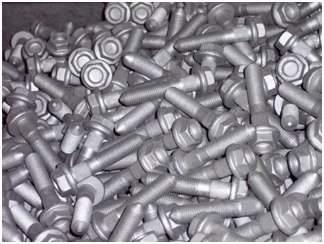
Zinc lamellar coating is a non-electrolytic type and provides reliable protection against corrosion. The coating consists of a mixture of zinc and aluminum flakes (lamellas), connected by an inorganic binder.
The Russian standard GOST R ISO 10683-2013 sets the requirements for zinc lamellar coating for threaded connecting elements. The European standard DIN EN 13858 defines the requirements for zinc lamellar coating for non-threaded connection elements and other structural elements.
Zinc lamel coatings are divided into two groups:
1. Coatings containing Cr (VI) hexavalent chromium. Surfaces with such a coating provide increased corrosion resistance with a small layer thickness, however, Cr (VI) is hazardous to the environment. EU directives prohibit the use of coatings containing Cr(VI), in particular the EC Directive 2000/53 on the recycling of old vehicles, which came into force on 01.07.2007, and the EG Directive 2002/95 on the restriction of the use of hazardous substances in the manufacture of electrical and electronic equipment. In other industries such coatings are still allowed.
2. Coatings that do not contain Cr (VI). Such coatings are much more environmentally friendly, so the automotive industry in developed countries has completely abandoned the use of coatings containing Cr (VI). Automotive manufacturers and their suppliers have developed their own specifications and technical conditions for the supply of products with zinc lamel coating, to develop clear requirements for such coating systems.
“Zinc lamel coating” is a general term for this coating technology, while various manufacturers offer this coating method under their own brand. Enterprises often act as licensees for individual coating plants.
History
Electrolytically coated surfaces provide relatively low corrosion resistance. When galvanizing high-strength steels (on fasteners with a strength class higher than 8.8), there is a danger of hydrogen embrittlement. Thus, the need arose in industry to use a different anti-corrosion protection system. High-strength steel parts (bolts, nuts, studs), structural parts with a tensile strength of more than 1000 N/mm² or with a hardness of more than 320 HV are susceptible to hydrogen embrittlement. Electroplating methods and etching during surface preparation contribute to the emergence of conditions for the occurrence of brittle fracture caused by saturation of the surface with hydrogen.
In the 70s of the last century, a new coating system was developed in the USA: zinc lamellar coating (patent No. 1376067). Due to the low layer thickness, usually 8-12 microns, this technology provided a high degree of anti-corrosion protection and avoided hydrogen embrittlement.
In the 80s and 90s, this technology began to be actively used in the automotive industry. The high demands for corrosion resistance in the automotive industry have made it possible to consider zinc lamellar coatings as an alternative to galvanic coatings in critical areas, and the absence of hydrogen embrittlement has allowed the expansion of the areas of application of high-strength fasteners.
Properties
Fasteners and other structural elements with zinc-lamella coatings have the following advantages:
- aesthetic appearance with a choice of colors;
- very high corrosion protection (240-1500 hours in a salt fog chamber, as required);
- resistance to temperature changes;
- high resistance to chemicals;
- environmental friendliness;
- controlled friction coefficient;
- no risk of hydrogen embrittlement on high-strength products;
- specified electrical conductivity;
- other properties to improve curlability.
In addition to the automotive industry, this coating technology is also used in the production of wind power plants, in the construction industry, the production of electrical equipment, transport engineering, the production of mining equipment, the oil and gas industry, the railway, the agro-industrial and food industries and in other industries.
Zinc lamellar coatings create so-called cathodic protection, when less noble zinc “sacrifices” itself in order to protect the metal being coated. The thickness of the coating layer is usually 5-15 microns, in special cases the layers can be even thicker. On parts with metric threads, it is necessary to comply with the tolerances established by the GOST R ISO 4759-1-2009 standard in order to ensure the curlability of threaded parts and comply with the specified friction coefficient parameters. Other methods of applying coatings thicker than 60 microns usually require additional thread processing after coating.
Unlike paint and varnish coatings, in which there is a danger of destruction of the protected surface due to damage to the continuity of the coating, in the system of zinc lamellas this phenomenon is prevented due to the “sacrificial” action of zinc. Conducted tests of the resistance of zinc-lamella coatings in salt fog show better anti-corrosion protection compared to standard galvanic zinc coating, which, when tested in salt fog (according to GOST 9.308-85 method 1), often provides anti-corrosion protection for only 96-140 hours.
Coating technology
The composition for zinc lamel coating is supplied in liquid form; before use, the initial coating material must be prepared to ensure the properties of the coating in accordance with customer requirements, because Its viscosity, temperature and homogeneity play an important role. The coating material can be applied in different ways, including:
- Spraying. The coating material is applied to the surface of the prepared parts using a spray gun. This can be done manually or in a fully automated spray system. The size of the parts is limited only by the capabilities of the conditions of preparation and further heat treatment.
- Immersion with centrifugation. The items are loaded into the cart. Coating is carried out by immersing the basket in a container with coating material. After immersion, centrifugation is performed to remove any remaining coating composition. Suitable for small and bulk parts.
- Immersion with centrifugation on equipment. The parts are placed on the tooling or fixed, immersed, followed by centrifugation and movement through the oven in the same tooling. Used for particularly critical medium-sized parts.
- Dive with pull. The parts are immersed in the liquid coating medium and then smoothly removed. Used for coating large parts.
Before coating, parts are tested preparation. When etching (with sulfuric or hydrochloric acid), atomic hydrogen is formed, which can penetrate the structure of the steel, as a result of which it becomes brittle. To avoid such embrittlement, other methods of pre-treatment are required. The traditional cleaning method is to degrease the surface using an alkaline aqueous solution, followed by shot blasting with very fine steel balls. Cleaners remove grease, oil and dirt from metal surfaces. Shot blasting removes scale and rust by exposing the surface of parts to steel microparticles in the form of balls, accelerated in a chamber using a turbine. When using both methods, hydrogen is not formed, as a result of which there is no danger of hydrogen embrittlement of high-strength parts.
After preparing the surface, the coating is applied. The parts on the hangers are spray-coated, the parts in the basket are dipped into a tank with a liquid composition and centrifuged. A thin film of coating material is formed on the surface of the parts. To ensure the specified properties of zinc lamel coatings, a drying-sintering process is then required.
Coated parts enter the oven under controlled temperature conditions and their passage time. The combined effect of temperature and time depends on the material used for the coating and the manufacturer, since each manufacturer of zinc laminate coatings has its own proprietary formula for these ratios. The set drying-sintering temperatures are 200 °C, 240 °C and 320 °C. After sintering, the coating is structured and forms a uniform, thin, adhesive-strong and dry layer.
Application
Zinc lamellar coatings are used throughout the world in the automotive and construction industries as anti-corrosion coatings providing cathodic protection. In combination with additional thin-layer coatings from materials of organic and inorganic origin, it is possible to obtain various colors, provide resistance to chemicals, reduce electrical conductivity (when using organic materials), and maintain excellent curl of threaded parts. If necessary, additional lubricants or locking compounds can be used.
Steel parts that can be coated with zinc lamellar coating include: bolts, nuts, washers, studs, screws, self-tapping screws, anchors, springs, sheet steel parts, structural elements, etc.
In wind power plants, such a coating is applied to threaded parts. Coating systems for wind energy installations are certified by the German classification society Germanischer Lloyd.
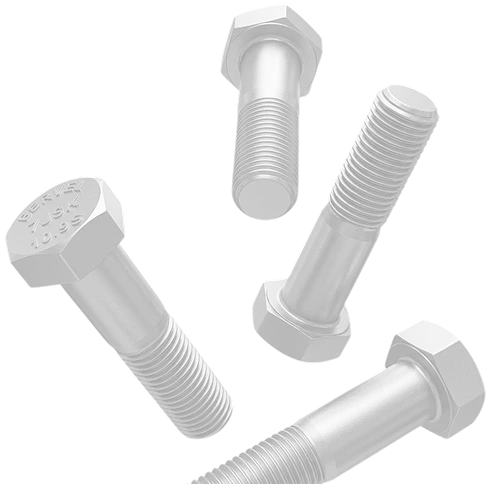
Zinc lamel coating is especially suitable for high-strength bolts, screws, studs (strength class 10.9 and above), high-strength nuts (strength class 10 and above), structural parts with a tensile strength of more than 1000 N/mm² or a Vickers hardness of more than 320 HV to avoid hydrogen embrittlement.
Based on materials from the magazine “Fasteners, adhesives, tools and...”:
http://fastinfo.ru/pages/po_stranicam_zhurnala/1_51_2015/cinklamelnoe_pokrytie/