Author: Maxim Krepak
Zinc laminate coatings typically serve multiple functions. The main function of zinc lamellar coating is to provide corrosion protection to metal products. This coating copes with this task much better than its analogues. The demonstrated resistance of zinc laminate coatings to salt fog exceeds 2000 hours. In comparison, parts galvanized by galvanic methods show red corrosion after only 96 hours of such testing. In terms of anti-corrosion resistance, hot-dip galvanized fasteners with a durability of 850 hours are close to zinc-lamella fasteners, but in this case the thickness of the protective layer is 50 microns and higher versus the thickness of 10-15 microns of the zinc-lamella coating.
What is zinc lamel coating?
Zinc-lamella metal coating is a layer consisting of flakes (lamellas) of zinc and aluminum, connected by a three-dimensional lattice of titanium or chromium oxide. The thickness of such a layer is on average 10-15 microns.
The key word in the above is the word "cereal". It expresses the innovative ideology of this type of coating. Microflakes of zinc and aluminum are stacked in multilayer stacks, overlapping in all directions horizontally. This arrangement of flakes (scales) plus their gluing with binders provides a dense electrically conductive layer impenetrable to air and moisture. In other words, zinc lamellar coating has high barrier and electrochemical (cathodic) protection.
Unlike zinc flakes, the spherical granules (this is a different ideology) in popular zinc-filled paints do not provide such dense packing of the metal in the coating and sufficient contact to ensure electrical conductivity. To obtain comparable corrosion resistance, a paint layer filled with zinc granules must reach 80-100 microns.
Application technology
The technology for applying zinc lamellar coatings is both simple and complex at the same time. Simplicity lies in the small number of stages of the technical process and the design features of the necessary equipment. Parts must be degreased using standard methods, the scale/rust must be knocked off (at the same time activating the metal surface) in a shot blasting machine, poured into a centrifuge, twisted, and baked in an oven at 230 °C. The difficulty, as always, lies in the details. Viscosity needs to be selected for your parts from a fairly wide range of recommended values, speed and centrifugation time to obtain the desired coating thickness - in general, an exclusively empirical process. For example, combinations of these two variables allow thickness-viscosity play to minimize washer sticking.
Preparing the surface and maintaining its cleanliness throughout the entire technological cycle is a process that is very sensitive to external factors. For example, it is enough to lightly touch the part with your finger, and at the point of contact there will be no adhesion between the coating and the base.
What then can we say about oil residues on parts, pallets, baskets, gloves, finally? And you begin to identify many other nuances only by directly starting to apply this coating.
Practical application of zinc lamellar coatings
Based on the main function of this type of coating, they (coatings), first of all, should be used where corrosion is contraindicated. Therefore, the main industries where “zinc lamella” has become the standard for corrosion protection (though not yet in Russia) are the automotive industry, shipbuilding, and electric power (in terms of wind generators, both offshore and onshore).
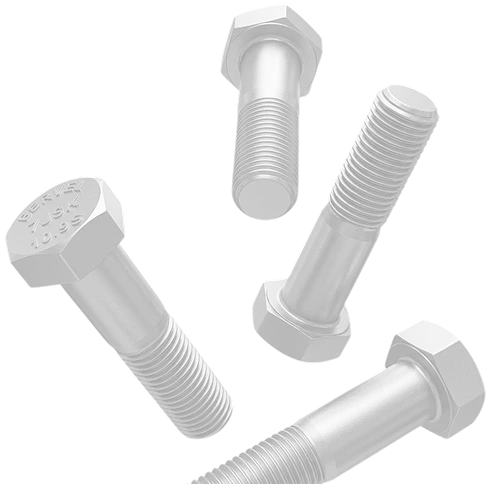
Bolts, nuts, washers, screws, studs and other fasteners that should not be eaten by rust are direct “clients” for this technology.
The corrosion resistance of zinc lamellar coatings under extreme operating conditions is clearly illustrated by the experience of manufacturers of offshore wind generators. The warranty period for protection against red corrosion of the zinc lamellar pins that secure the generator blades is 100 years in operation (not storage). For the automotive industry, special top (outer) coating layers have been developed containing lubricants that provide the overall coefficient of friction in threaded connections within a fairly narrow range from 0.12 to 0.15.
The abrasion resistance of zinc laminate coatings is less than that of analogues, but this characteristic cannot be called the weak point of this technology. According to the requirements of automakers, the number of bolts and nuts must be screwed together at least 50. How many times during the economic life of a car do we unscrew wheel bolts? — This is how many times our coating must withstand being twisted and twisted with a key.
An important practical application of this technology is the ability to coat large-sized products by spraying. Compositions have already been developed that can polymerize (harden) even at room temperature.
For example, let’s take some bridge structures or power transmission towers for consideration. They are made in parts, coated with zinc, painted, etc., and then taken to the installation site. At the installation site they are joined, screwed, welded, etc. Note that this necessarily damages the anti-corrosion coating. But the assembled bridge cannot be dipped into a galvanic bath to restore the integrity of the coating.
In our case, parts coated with zinc lamella are susceptible to damage, because right at the installation site, a specialist, having a supply of a composition that hardens in air, will restore the damaged areas. No anti-corrosion coating has such virtually unlimited repairability.
Quality
The quality of zinc lamel coating mainly depends on two key factors: the quality of the applied composition and the quality of the surface preparation of the part. When it comes to raw materials for zinc lamel coatings, our market is currently dominated by two manufacturers - Atotech and Dörken MKS. These zinc laminate coating and process companies have long established themselves as innovators and experts in the field of corrosion protection. The quality of raw materials from these companies has become the standard for most consumer companies of zinc laminate coatings in Europe. If you do not violate the technology for preparing the compositions, apply them correctly and create conditions for polymerization, then, we can say, the quality is guaranteed.
Preparing the surface of parts before applying zinc lamel coating is a factor that can negate any high quality of the raw material. If the zinc lamel coating peels off from the base, no names or quality certificates of raw materials will help. But surface preparation is a separate and very capacious topic worthy of a separate review. Based on practical experience of working with zinc laminate coatings, I would like to make one small remark. Sometimes clients attribute the quality of the coating to the nuances of the product itself on which the coating is applied. The micron layer of zinc lamellar coating repeats all the smallest details of the surface of the product with absolute accuracy. Including defects. In other words, if the thread of a bolt/nut before coating has defects, then even with coating these defects will not provide high-quality make-up. If the surface has cavities and chips, then the situation with the coating will not improve. That is, you need to be able to separate: the quality of the coating itself and the quality of the coated product.
In conclusion, I would like to note that zinc lamel coatings, like many other useful things, are not a panacea. Yes, corrosion resistance is “excellent”. But for some, the metallic strength of hot zinc is more important. Or shiny chrome surfaces, zinc lamellas cannot yet even partially replace. In general, depending on what is required from the coating, so should the demand. Zinc lamellar coating is, first of all, protection against corrosion for decades.
Date: 12/14/17