Translation: Ignatova D.V., marketing specialist LLC ZVK "BERVEL"
Did you think that corrosion was just invisible layers of red oxide that eat away at steel and iron products? We advise you to think about this question.
Corrosion can occur anywhere, even in facilities located in dry climates and landlocked countries. Structures located in the coastal zone and offshore structures are most susceptible to corrosion due to exposure to sea water. Metal surfaces are susceptible to corrosion when they come into contact with electrolytes (corrosion agents). Corrosion agents can be atmospheric gases, such as sea, city or industrial air (sulfur dioxide, hydrogen chloride and sulfite, etc.) or active liquids - brines, alkalis, sea water and others.
Unfortunately, corrosion cannot be avoided, but its manifestation can be reduced as much as possible. The best way to protect against corrosion is to analyze the likelihood of its occurrence at the initial stage of project development and eliminate the possibility of galvanic cell formation, as well as provide the necessary materials in advance to prevent corrosion from occurring. It is also necessary to avoid combining metals, which accelerate corrosion by contacting each other. This phenomenon is called contact corrosion.
Recommendations for counteracting galvanic corrosion:
1. Eliminate the possibility of formation of a galvanic cell.
2. Avoid connecting metals that have a large potential difference.
3. The base material from which the fastener is made must be more active (anode) than the construction material (cathode).
Protecting products from corrosion
As a rule, when metals interact with a high difference in electrode potentials, galvanic corrosion occurs. The process of galvanic corrosion can be clearly demonstrated using the example of mutual contact between aluminum and stainless steel products. Aluminum, a more reactive metal, is the anode in this case, and the less active stainless steel is the cathode. When stainless steel and aluminum interact, a large potential difference occurs according to the range of voltages in the metals. In this case, due to the electrolyte (liquid) acting on the electrical element, an electric current arises, and the anode, in this case aluminum, corrodes. A similar phenomenon also occurs in screw connections, in which a potential difference is formed between the metals, and humidity plays the role of an electrolyte.
Ignorance of such galvanic reactions can lead to significant financial losses and also lead to serious consequences. Accordingly, you should avoid connecting metals with large potential differences. For example, at one oil refinery in the United States, losses from alkali cracking caused by corrosion amounted to approximately $500 million.
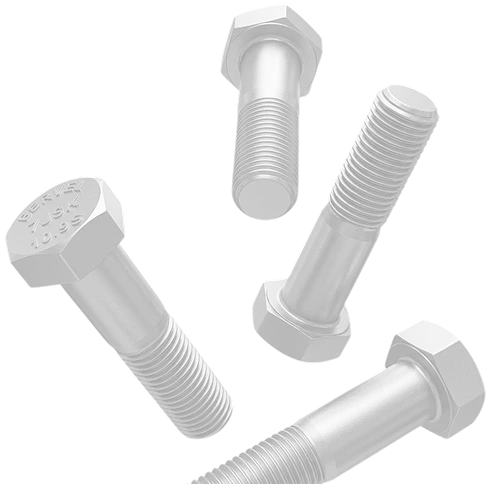
Bolts are an integral part of the construction process, so the quality of the fasteners also plays an important role. If the bolts corrode, the entire structure will collapse. Bolts in any design must be reliable. Corrosion of bolts leads to reduced strength characteristics of the connection, damage to the metal and subsequent destruction of the structure. In the case of high-strength fasteners, corrosion can lead to cracks and sudden collapse of the structure. Sometimes it is not practical to use stainless steel fasteners or use the same base metal for all joint elements. In such cases, it is worth resorting to corrosion protection methods such as protective coatings, electrochemical (cathodic) protection or corrosion inhibitors.
Protective coatings and other alternatives
Leading specialists of the Nord-Lock group of companies have extensive experience in studying problems caused by galvanic corrosion and offer their solutions. Nord-Lock APAC technical director Harlen Siau is convinced that the choice of steel grade and bolt coating is a key factor in the fight against corrosion. Therefore, the company’s specialists find out from the customer all the details about the product and its operating conditions before choosing the right protective coating. Today, the most popular protective coatings for fasteners are zinc lamellar coatings and hot-dip galvanizing.
Finally, Harlen Siau advises remembering that corrosion cannot be avoided, only its severity can be reduced, so it is necessary to carry out constant checks and controls at any facility.
Source:Fastener and Fixing Technology
Date: 03/01/18